
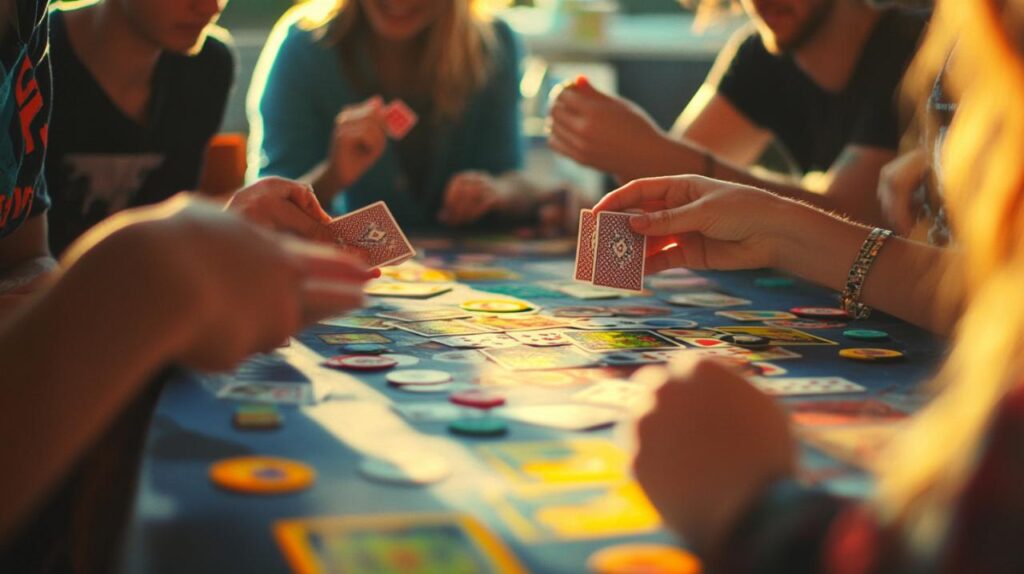
In the realm of fast-paced family entertainment, few card challenges capture the thrill of lightning-quick observation quite like this vibrant symbol-matching phenomenon. Designed to test reflexes and visual acuity, this game has become a staple in households seeking energetic fun that bridges generations. Whether you're gathering around the table with young children eager to prove their speed or challenging seasoned opponents to a battle of wits, the race to identify identical images creates moments of laughter, friendly rivalry, and genuine excitement that keep players coming back for more.
What Makes Dobble a Must-Have Party Game for All Ages
Quick Rules and Easy Setup for Instant Family Fun
One of the most appealing aspects of Dobble lies in its remarkable simplicity. The game requires no lengthy instruction manual or complex preparation, making it an ideal choice for spontaneous gatherings. Each round begins with players receiving a selection of cards, and the objective remains straightforward: be the first to spot the matching symbol between your card and the central pile. This ease of understanding means that even the youngest participants can grasp the mechanics within moments, allowing families to dive straight into the action without delays. The fast nature of each match ensures that attention spans remain engaged, while the absence of complicated scoring systems keeps the focus firmly on the thrill of discovery. Asmodee, the company behind this sensation, has crafted an experience that celebrates accessibility without sacrificing depth, ensuring that both newcomers and experienced players find equal enjoyment in every session.
How observation and speed create addictive gameplay
The brilliance of Dobble emerges from its dual demand on observation skills and rapid response. Players must simultaneously scan multiple symbols, compare them against opponents' cards, and announce their findings before anyone else. This combination transforms a simple card challenge into an exhilarating test of reflexes and concentration. The game's design ensures that no two cards share more than one matching image, creating a mathematical puzzle that keeps the brain working overtime. Children particularly benefit from this mental workout, as the constant practice of quick thinking and visual processing helps develop cognitive abilities in a playful context. Yet the appeal extends far beyond educational value; the sheer adrenaline of beating others to the punch generates an addictive loop that encourages immediate replays. The speed at which rounds conclude means that even a brief session can accommodate numerous games, making it perfect for time-limited gatherings or as a warm-up activity before other entertainment.
Exploring Different Dobble Versions: From Classic to Harry Potter and Olympics Editions
Comparing the Classic, Metallic, and Themed Versions Available
The original version of Dobble established the foundation with its colourful array of everyday objects and whimsical illustrations, but the game has since expanded into numerous themed iterations that cater to diverse interests. The classic edition remains a reliable choice for purists who appreciate the original design, while the metallic version adds a premium touch with its distinctive tin packaging and slightly elevated production quality. For fans of wizardry and magic, the Harry Potter edition transforms the familiar gameplay by incorporating iconic images from the beloved franchise, allowing players to connect with their favourite characters and artefacts while racing to match symbols. Similarly, the Olympics edition celebrates athletic achievement through sport-themed imagery, offering a fresh perspective on the core mechanics. Each version maintains the essential gameplay that makes Dobble compelling, yet the thematic variations provide unique flavour that can enhance the experience for dedicated enthusiasts. Whether you prefer the timeless appeal of the standard cards or the novelty of themed content, the underlying challenge of rapid observation and speed remains constant across all iterations.

Which version suits your family best: price and features breakdown
Choosing the right edition often depends on both budget considerations and personal preferences within your household. The classic version typically offers the most affordable entry point, making it an excellent option for families curious about the game but hesitant to invest heavily before experiencing it firsthand. The metallic edition commands a slightly higher price due to its enhanced packaging and durability, which may appeal to collectors or those seeking a gift with a more premium presentation. Themed versions such as the Harry Potter edition generally sit at a mid-range price point, offering added value for fans who want to immerse themselves in their favourite fictional universe while enjoying competitive gameplay. When evaluating which version to purchase, consider the interests of your primary players; children captivated by magical stories might find the Harry Potter cards more engaging, while sports enthusiasts could gravitate toward the Olympics edition. Regardless of the chosen variant, the core value proposition remains exceptional, as Dobble consistently delivers hours of entertainment at a price that compares favourably to many other family games. The company behind these editions has ensured that each version maintains the quality and replayability that defines the brand, making any choice a worthwhile investment in shared fun.
Why dobble sharpens reflexes and brings players together
Building quick thinking skills in children through symbol matching
Beyond its entertainment value, Dobble serves as an effective tool for cognitive development in younger players. The constant demand for rapid visual scanning and pattern recognition exercises the brain in ways that translate to real-world benefits. Children who regularly engage with the game often show improved attention to detail and enhanced ability to process visual information quickly. The competitive element motivates young participants to push their limits, striving to match symbols faster with each successive round. This natural drive to improve creates a positive feedback loop where practice leads to measurable progress, boosting confidence alongside cognitive skills. Parents and educators have noted that the game's accessibility makes it particularly valuable for mixed-age groups, as younger children can compete on relatively equal footing with adults thanks to the nature of the observation challenge. The fast pace ensures that no single player dominates indefinitely, giving everyone moments of triumph and encouraging persistence. By framing skill development as play rather than work, Dobble achieves what many educational tools struggle to accomplish: sustained engagement that produces genuine learning outcomes without feeling like a lesson.
Creating competitive yet friendly moments between opponents
The social dimension of Dobble cannot be overstated, as the game excels at fostering connections between players while maintaining a spirit of friendly competition. Unlike some games that can create tension or frustration, the brief duration of each round and the element of chance inherent in card distribution keep the atmosphere light and enjoyable. Opponents find themselves laughing at near-misses and celebrating impressive reflexes, with the fast turnover of games ensuring that no single loss feels significant. Families report that Dobble has become a go-to activity for gatherings, as it accommodates various player counts and requires minimal space or preparation. The game's ability to engage everyone simultaneously eliminates the downtime that can make turn-based games feel sluggish, keeping energy levels high throughout the session. Whether played between parents and children, among siblings, or with extended family members, the shared experience of racing to spot matching symbols creates memories and strengthens bonds. The balance between individual performance and collective enjoyment makes Dobble a rare achievement in game design, proving that simple mechanics executed brilliantly can deliver profound social value alongside pure entertainment.